Saturday, August 3, 2013

The 2nd Law of Thermodynamics


The 2nd Law of Thermodynamics says that entropy only increases in a closed system.  In very simple terms, nature tends towards equilibrium which results in going from order to disorder.  The disorder cannot be reversed unless you have both an outside force and a specific mechanism to restore that order.  If you are missing either one of these, the direction of heading toward disorder cannot be reversed.  Some believe this is where the arrow of time comes from. 


Here’s an example of the 2nd Law of Thermodynamics in action.  Take a glass of water and put a drop of blue dye in it.  The blue dye is concentrated and starts in a more orderly state.  Once it hits the water, it begins to diffuse through the water until it is equally and uniformly dispersed throughout the glass.  The blue dye has gone from a more ordered state to a more disordered state.  The solution has reached equilibrium.  This is the natural tendency.  To get the blue dye back to a more orderly state, an outside force is needed (heat) and a mechanism to restore the order (distillation/evaporation). 

Another thing to note is that it’s the difference in state that allows the change to take place; the blue dye vs the clear water.  This difference in state that can cause change can be referred to as a driving force.  Once the equilibrium has been reached, the color cannot become darker or lighter without either adding more dye or more water.  A driving force must be applied to bring about a change.  Another example would be having water at 50 degrees and wanting to heat it.  In order to do this, you need to add a heat source of a higher temperature, such as putting a pot on a stove.  The heat transfers from the burner to the pot/water until equilibrium is reached, where the heat entering the system and leaving the system are the same and the temperature cannot increase anymore.


For our universe, the drop of blue dye represents the singularity of the Big Bang (crudely, since the singularity wasn’t a pellet of energy).  It was the minimum entropy or maximally ordered state.  The entropy value has been calculated. 


The expansion of our universe is like the diffusion of the dye in the water.  The difference is the water was contained in a glass, where our universe continues to expand. 
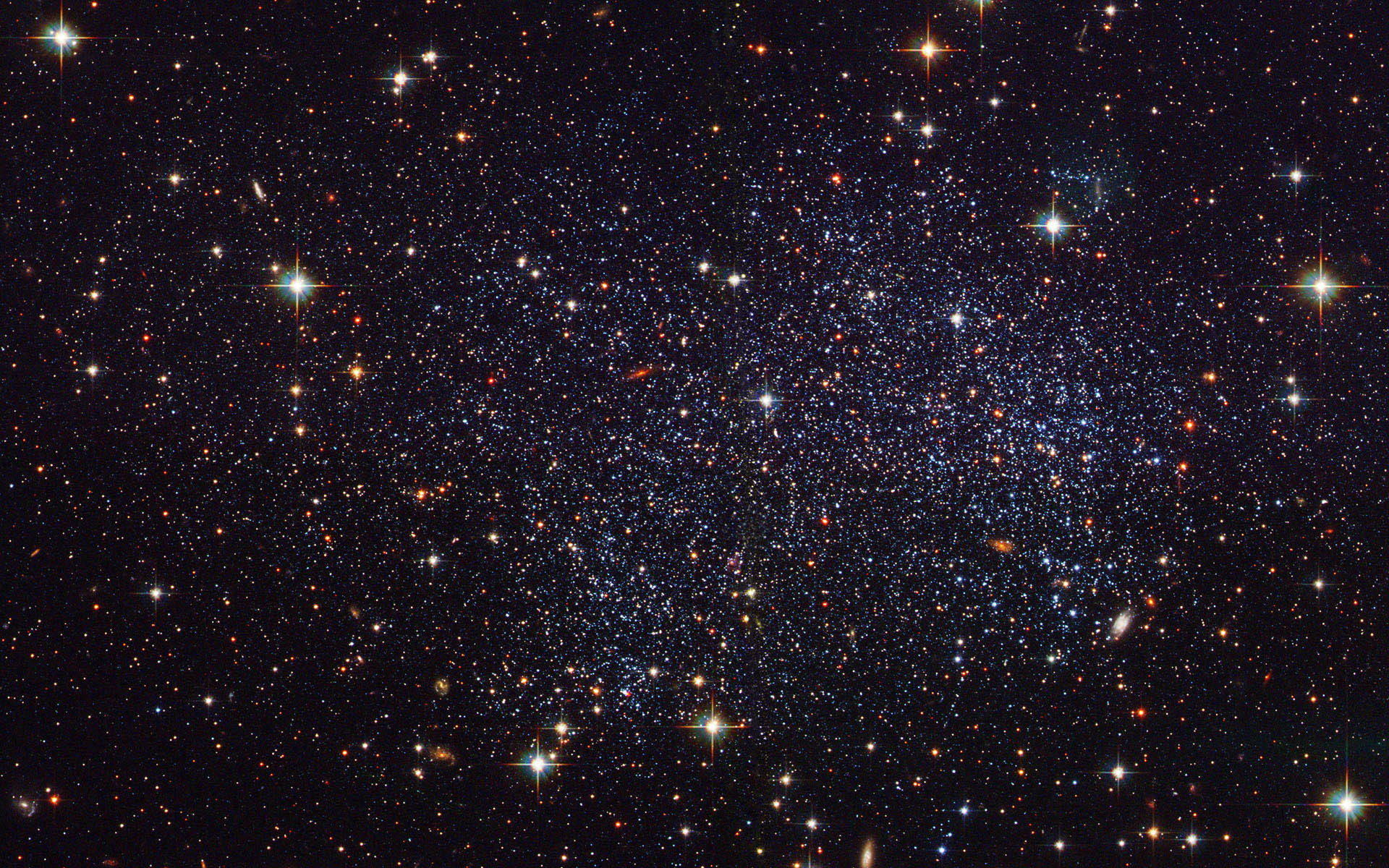

As this expansion continues, our universe will go more and more to an equilibrium state and the energy will equalize to the point of being ineffective.  There will not be a driving force to bring about a change in state and we will enter the Heat Death state.  The stars will burn out and all life will cease.


What does this mean? 

One of the implications is that the universe had a finite beginning.  If our universe did not have a finite beginning, we should have entered the Heat Death state an infinite time ago.  A beginning of the universe requires an outside cause to bring about the change in state.   
 
Maybe we are one of many universes spawned by the multi-verse which reset the entropy.  The 2nd Law of Thermodynamics would apply to the multi-verse as well, so the multi-verse should have entered the Heat Death state an infinite time ago.  One of the ironies of the multi-verse (there are many) is that the same laws of physics that describe our universe had to pre-exist for the formation of our universe, but that’s a different post for another day.
 

The Kalam Cosmological Argument in 4 Minutes


This video is an excellent, brief explanation of the Kalam Cosmological Argument with supporting evidence.  The modern day version of the Kalam Cosmological Argument was developed by William Lane Craig, who is today’s leading Christian apologist.  As Sam Harris said, “He puts the fear of God into atheists.”  His website, www.reasonablefaith.org, has many tools and resources for the evidence of God and Christianity.  WLC also wrote a book called, On Guard: Defending Your Faith with Reason and Precision which is the cliff notes version of his book Reasonable Faith.  While this is not required reading for a Christian, every Christian should have a basic knowledge of the evidence for a Creator and His revelation to us, Jesus Christ.


Wednesday, July 17, 2013

God of the Naturally Insurmountable Abyss


The good old “God of the gaps” argument. I’ve been accused of this and arguing from ignorance numerous times. The assumption is that because science does not know how the universe was formed, then theists assume there is a deity to make up for our ignorance. After all, science has closed many gaps in the past, so there is no reason to believe that science will not also find answers for the other areas we do not understand yet.

 
Science does indeed close many gaps in areas that we do not understand, but what about the gaps that science opens? What about the gaps that keep getting wider the more science learns? What about gaps that are so large that to close them through natural causes requires basic scientific, philosophical, and metaphysical principles to be violated? What about the gaps that give an appearance of design? That is more than a mere gap. It’s an abyss; an abyss that natural causes are unable to cross. I’m not saying “I don’t know; therefore, God”. I’m saying “Natural causes can’t; therefore, God”.


So here is my “God of the naturally insurmountable abyss” argument:


1) Everything which begins to exist has a cause.

2) The universe began to exist.

3) Therefore; the universe had a cause.


4) The universe is made of energy, space, and time.

5) Energy, space, and time cannot cause itself to come into being.

6) Therefore; the cause of the universe must be immaterial, spaceless, and timeless.


7) An infinite regress of causes is impossible.

8) Therefore; an uncaused cause must be the cause of our universe.


9) Only abstract objects or an unembodied mind can be immaterial, spaceless, timeless, and uncaused.

10) Abstract objects cannot cause anything.

11) Therefore; the cause of the universe is an unembodied mind.


Wednesday, July 3, 2013

The Kalam Cosmological Argument


The Kalam Cosmological Argument is a simple argument that establishes that the origin of the universe had a cause.  That is all it establishes.  It does not establish that God is the cause or that God does not need a cause, at least not on the surface.  Making that case requires a few additional steps.

Here is the modern version of the Kalam (by William Lane Craig):

1)      Whatever begins to exist has a cause

2)      The universe began to exist

3)      Therefore, the universe has a cause

The Kalam has the same structure as this accepted logical argument called a Syllogism.
1) All men are mortal
2) Socrates was a man
3) Therefore; Socrates was mortal.
 
Since the conclusion follows logically from the premises, one of the premises must be shown false In order to show that the conclusion is false.  Here’s why the premises are true.

1)      Whatever begins to exist has a cause

Philosophically:  It is a basic metaphysical and philosophical principle that something cannot cause itself to come into being.  There must be an external cause for something to come into existence, regardless of if it is creation from nothing or creation from something.
 

Scientifically:  Causality is a basic scientific principle that has never been falsified.  Science is based on math, logic, and causality.  Take any of those three away and you’ve killed science.
 
2)      The universe began to exist
 
Philosophically:  If the universe did not begin to exist, then it has an infinite past.  The problem with an infinite past is that you never reach the present.  With an infinite past, there is always more time to pass through.  There is no start or point to begin.  It’s like trying to jump in a bottomless pit; you never reach the bottom and have nothing to spring forward from.  Most philosophers consider an infinite regression not to be valid.
 
Scientifically:  All of the evidence we have today supports the Big Bang Theory, which is where the universe began expanding around 13.7 billion years ago.  Our universe has continued to expand.  An expanding universe could not have been expanding forever.  When you hit the rewind button, the expansion can only go back so far.  This is both intuitively truly and has been proven true.  Also, the entropy of our universe has been increasing over time.  This, too, could not have been increasing forever.  If our universe were infinitely old, we should have reached the Heat Death state an infinite time ago.  The Heat Death is predicted by the 2nd Law of Thermodynamics where will be no more energy available to do work, the stars burn out, and all life ceases.  It’s a lovely future we have in store, but it can only be in the future because there was a beginning.

3)      Therefore, the universe has a cause

Since both premises are true, it follows logically that the universe has a cause.

Again, the Kalam only establishes that the universe has a cause.  Establishing/disproving the possible cause(s) requires more steps.

Monday, June 3, 2013

Intellectual Escapism


I’ve been getting into several discussions with atheists online and I must admit that I’m amazed at the lengths people will go to intellectually to avoid the existence of God.  Relativism has invaded science; emotion has taken over logic in the name of rationality.  People claim they do not believe in God because of a lack of evidence, but then they point to stories of those who have left Christianity purely for emotional reasons; they ceased to feel want they once felt.  Then they become bitter and go on a crusade to educate others about their delusions. As someone who does not trust emotions, I find this baffling.  I’m not bitter that I no longer believe in Santa.  Why is God different? 


Here are some of my favorite objections to the arguments for God:
  • I am open to God existing, but only if he can be scientifically verified.
  • It may be possible for something to come from nothing without a cause.
  • Watch this video where an anti-theist scientist says something can come from nothing….but then later admits that nothing weighs something and isn’t really nothing.  Buy my book!
  • “Philosopher’s Nothing” may not even be possible, so there’s nothing to discuss.
  • A supernatural first cause that is not bound by our natural laws is special pleading, but it’s ok if the multi-verse is a first cause not bound by our natural laws.
  • There was no time before the big bang, so any questions about a cause for our universe is meaningless….unless you believe the multi-verse did it.
  • The "god of the gaps" argument is a logical fallacy….it's ok for the multi-verse to fill the gaps.
  • Just because there is no evidence that the multi-verse exists does not mean an atheist has faith. 
  • I trust science; that is not the same as faith.
  • We just got lucky with the fine tuning of the universe and with life forming from non-life. 
  • Why should we be surprised we exist?  Someone has to win the lottery.
  • Objective moral values do not exist, but God sure was evil in the OT.
  • Objective moral values exist through evolution and are set by society, but Nazi Germany (or anything else I disagree with) was/is still wrong.

"In faith there is enough light for those who want to believe and enough shadows to blind those who don't." - Blaise Pascal

I think this quote aptly describes what is happening in the mind of an unbeliever.  They have made a choice that they do not want to see; therefore, they do not see.  Rather than worship the creator, they worship the creation and ultimately themselves.


Sunday, April 21, 2013

Helen Roseveare – Fiction, Lie, Coincidence, or God?


I read this story in J.P. Moreland’s book, Kingdom Triangle. It’s told by Helen Roseveare, a missionary to Africa. It’s up to you to decide the best explanation for what happens.

One night, in Central Africa, I had worked hard to help a mother in the labor ward; but in spite of all that we could do, she died leaving us with a tiny, premature baby and a crying, two-year-old daughter. We would have difficulty keeping the baby alive. We had no incubator. We had no electricity to run an incubator, and no special feeding facilities. Although we lived on the equator, nights were often chilly with treacherous drafts.

A student-midwife went for the box we had for such babies and for the cotton wool that the baby would be wrapped in. Another went to stoke up the fire and fill a hot water bottle. She came back shortly, in distress, to tell me that in filling the bottle, it had burst. Rubber perishes easily in tropical climates. "...and it is our last hot water bottle!" she exclaimed. As in the West, it is no good crying over spilled milk; so, in Central Africa it might be considered no good crying over a burst water bottle. They do not grow on trees, and there are no drugstores down forest pathways. All right," I said, "Put the baby as near the fire as you safely can; sleep between the baby and the door to keep it free from drafts. Your job is to keep the baby warm."

The following noon, as I did most days, I went to have prayers with many of the orphanage children who chose to gather with me. I gave the youngsters various suggestions of things to pray about and told them about the tiny baby. I explained our problem about keeping the baby warm enough, mentioning the hot water bottle. The baby could so easily die if it got chilled. I also told them about the two-year-old sister, crying because her mother had died.

During the prayer time, one ten-year-old girl, Ruth, prayed with the usual blunt consciousness of our African children. "Please, God," she prayed, "send us a water bottle. It'll be no good tomorrow, God, the baby'll be dead; so, please send it this afternoon." While I gasped inwardly at the audacity of the prayer, she added by way of corollary, " ...And while You are about it, would You please send a dolly for the little girl so she'll know You really love her?" As often with children's prayers, I was put on the spot. Could I honestly say, "Amen?" I just did not believe that God could do this. Oh, yes, I know that He can do everything: The Bible says so, but there are limits, aren't there? The only way God could answer this particular prayer would be by sending a parcel from the homeland. I had been in Africa for almost four years at that time, and I had never, ever received a parcel from home. Anyway, if anyone did send a parcel, who would put in a hot water bottle? I lived on the equator!

Halfway through the afternoon, while I was teaching in the nurses' training school, a message was sent that there was a car at my front door. By the time that I reached home, the car had gone, but there, on the veranda, was a large twenty-two pound parcel! I felt tears pricking my eyes. I could not open the parcel alone; so, I sent for the orphanage children. Together we pulled off the string, carefully undoing each knot. We folded the paper, taking care not to tear it unduly. Excitement was mounting. Some thirty or forty pairs of eyes were focused on the large cardboard box.

From the top, I lifted out brightly colored, knitted jerseys. Eyes sparkled as I gave them out. Then, there were the knitted bandages for the leprosy patients, and the children began to look a little bored. Next, came a box of mixed raisins and sultanas - - that would make a nice batch of buns for the weekend. As I put my hand in again, I felt the...could it really be? I grasped it, and pulled it out. Yes, "A brand-new rubber, hot water bottle!" I cried. I had not asked God to send it; I had not truly believed that He could. Ruth was in the front row of the children. She rushed forward, crying out, "If God has sent the bottle, He must have sent the dolly, too!" Rummaging down to the bottom of the box, she pulled out the small, beautifully dressed dolly. Her eyes shone: She had never doubted! Looking up at me, she asked, "Can I go over with you, Mummy, and give this dolly to that little girl, so she'll know that Jesus really loves her?"

That parcel had been on the way for five whole months, packed up by my former Sunday School class, whose leader had heard and obeyed God's prompting to send a hot water bottle, even to the equator. One of the girls had put in a dolly for an African child -- five months earlier in answer to the believing prayer of a ten-year-old to bring it "That afternoon!"


"And it shall come to pass, that before they call, I will answer; and while they are yet speaking, I will hear." (Isaiah 65:24)


Saturday, April 20, 2013

My First Debate!


I had my first online debate with some atheists on Reddit Friday regarding the Kalam Cosmological Argument (by William Lane Craig) for the existence of God. 

Here is how the Kalam goes:
1.      Everything that has a beginning of its existence has a cause of its existence;
2.      The universe has a beginning of its existence;
3.      Therefore, The universe has a cause of its existence

My question was, “Which of the premises of the Kalam are incorrect and why?”

Here were my reasons for supporting the premises:
1.   Observation shows #1 to be true. What has not been observed is something beginning to exist without a cause
2.   Big Bang Theory, 1st & 2nd Laws of Thermodynamics, an actual infinite cannot exist in nature.
a.   The Big Bang Theory shows that there was a massive expansion of energy, but that energy either pre-existed this expansion or was created at the expansion.
b.   The 1st Law of Thermodynamics says that energy cannot be created in nature.  If the energy was created, only a cause outside of nature could create the energy.
c.   The 2nd Law of Thermodynamics says that entropy (usable energy) will continue to increase until there is no more usable energy left.  As a result, the universe will enter a state of Heat Death where everything turns cold and nothing can live. 
d.   If the universe has an infinite past, the universe would have reached the Heat Death state an infinite time ago.
 
Here are some of the rebuttals I saw:
1.  “creation ex material” and “creation ex nihilo” cannot be compared since we’ve never seen “creation ex nihilo”
2.  We don’t know if the Big Bang was ex nihilo or ex material
3.  Virtual particles pop in and out of existence and are uncaused (even though the cause is the energy in the vacuum fluctuations) because this phenomenon occurs randomly.  There is no hidden mechanism for their appearances; the energy merely sets the conditions for this to occur.
4.  Radioactive decay does not have a cause.  It just happens.
5.  We don’t know if the philosopher’s “nothing” is possible.
6.  If nothing exists, then something coming into existence cannot have a cause since there was nothing to act on.
7.  “It's laughable nonsense that only a childish intellect would consider valid... neither premise is known to be true and it's merely begging the question.  The cosmological argument for God is silly, the ontological argument for God is silly, and the teleological argument for God is silly. These are tools used by intelligent, but dishonest, people to convince dumb or ignorant people to subscribe to their irrational belief system, and it works, extremely well. There have been many discussions on Reddit where former atheists were asked why they became theists and a common answer is one or more of these arguments.”
 
I believe the argument stood up well, although the atheists would disagree.  I suppose we are all biased.  Care to guess which rebuttal is my favorite?  #7 inspires me to continue these types of debates on Reddit. 

One may ask, “Why bother debating atheists?  You aren’t going to change their minds.”  I agree, I’m not likely to convert one of the atheists that I’m debating with.  They are very entrenched in their beliefs.  However, there are many Christians who silently struggle with doubt.  They do not feel free to be open and honest with the questions they have.  In searching for answers, the internet is the place they’ll go.  It’s not always about who someone is discussing an issue with; it’s also about who is listening (or reading).